
Zalfa Assaf
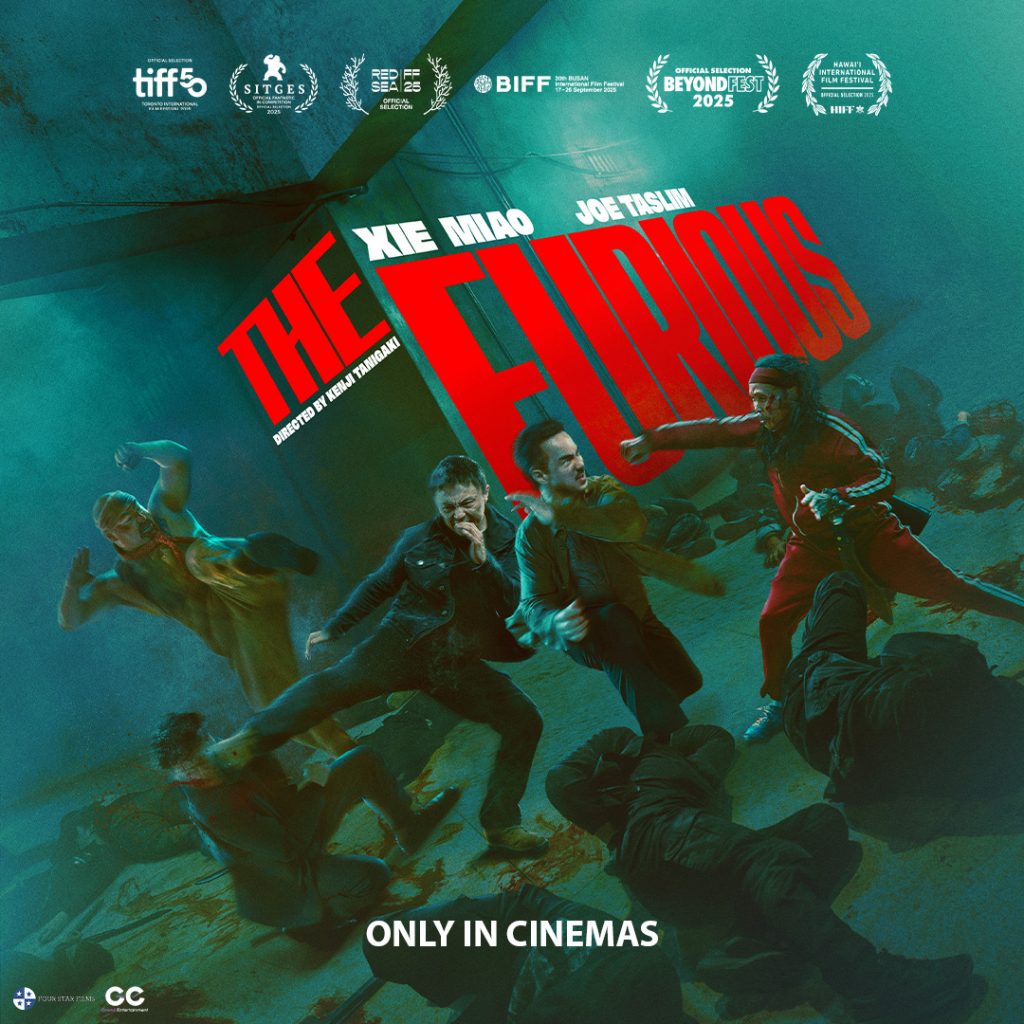
Currently screening at Grand Cinemas, The Furious is an action thriller that does not rely on spectacle alone, but emerges from a deeply human wound that gradually transforms into a force of determination and confrontation. Beneath its relentless pace, intense pursuits, and powerful fight sequences, the film explores loss, anger, and the search for truth, turning a personal tragedy into a larger struggle against a criminal network built on exploitation, corruption, and hidden interests.
Rather than following a conventional revenge formula, the film uses a father’s devastating loss as the emotional foundation of its story. From its opening moments, it places the audience inside a tense and urgent journey, where every step forward becomes a race against time and every confrontation reveals another layer of a dangerous world.
The story follows Wang Wei, a mute father whose daughter Rainy is kidnapped by a human trafficking network. Yet the strength of the character lies not only in his tragedy, but in the way the film portrays his suffering. Unable to express himself through words, Wang Wei communicates through his eyes, movements, and physical presence. Xie Miao delivers a restrained and powerful performance, transforming silence into a dramatic language and portraying a father whose grief becomes the force driving him forward.
During his search for his daughter, Wang Wei crosses paths with Navin, a man whose journey is connected to the investigation into the same criminal network. Navin is searching for his wife Matia, a journalist who disappeared while investigating a case involving child abduction and human trafficking. As their paths converge, their personal struggles become part of a wider battle to expose a system protected by criminal interests, corruption, and those who benefit from keeping the truth hidden.
The film expands beyond a simple rescue mission, becoming a confrontation with an organized criminal structure where justice itself becomes a dangerous pursuit.
Directed by Kenji Tanigaki, a filmmaker with extensive experience in action choreography and stunt design, The Furious understands action as a cinematic language rather than a separate spectacle. The fight sequences are not merely displays of physical ability; they reflect the characters’ emotions, fears, and determination while pushing the narrative forward.
Tanigaki’s direction is built on precision, clarity, and physical intensity. The camera follows the movement instead of hiding it, while the environments become active elements within the choreography. Narrow spaces, confined locations, and harsh surroundings are transformed into essential parts of the confrontation, giving each sequence its own rhythm and visual identity.
Xie Miao carries the film through a performance based on silence and inner strength, portraying a father whose pain exists beyond words. Joe Taslim brings emotional depth and physical presence to Navin, combining vulnerability with the action expertise that has made him one of the most recognizable figures in contemporary martial arts cinema. Yayan Ruhian, Brian Le, and JeeJa Yanin further elevate the action through their distinctive combat styles and physical performances.
One of the film’s strongest elements is its commitment to practical action. The performers’ bodies become part of the cinematic experience, with movement, timing, and discipline replacing excessive dependence on digital effects. The Furious celebrates the authenticity of real physical performance and the energy created when action is built through craftsmanship.
Dramatically, the film remains faithful to its identity as an intense action piece while giving its characters clear emotional motivations. The battles are not simply obstacles to overcome; they are extensions of the personal losses and moral struggles that define the characters’ journey.
What gives The Furious its deeper impact is the connection between action and humanity. Violence is not presented as an end in itself, but as the consequence of a world that pushes its characters toward extreme choices. Wang Wei’s silence and contained anger become a cinematic expression of grief, resilience, and the desire for justice.
Ultimately, The Furious is more than a film of chases and combat. It is a story about loss, determination, and the courage required to confront a system where truth is deliberately buried. Through Kenji Tanigaki’s dynamic direction, the physical commitment of its cast, and its emotional foundation, the film proves that action cinema can carry both intensity and human depth.
The Furious is currently screening at Grand Cinemas.