
Zalfa Assaf
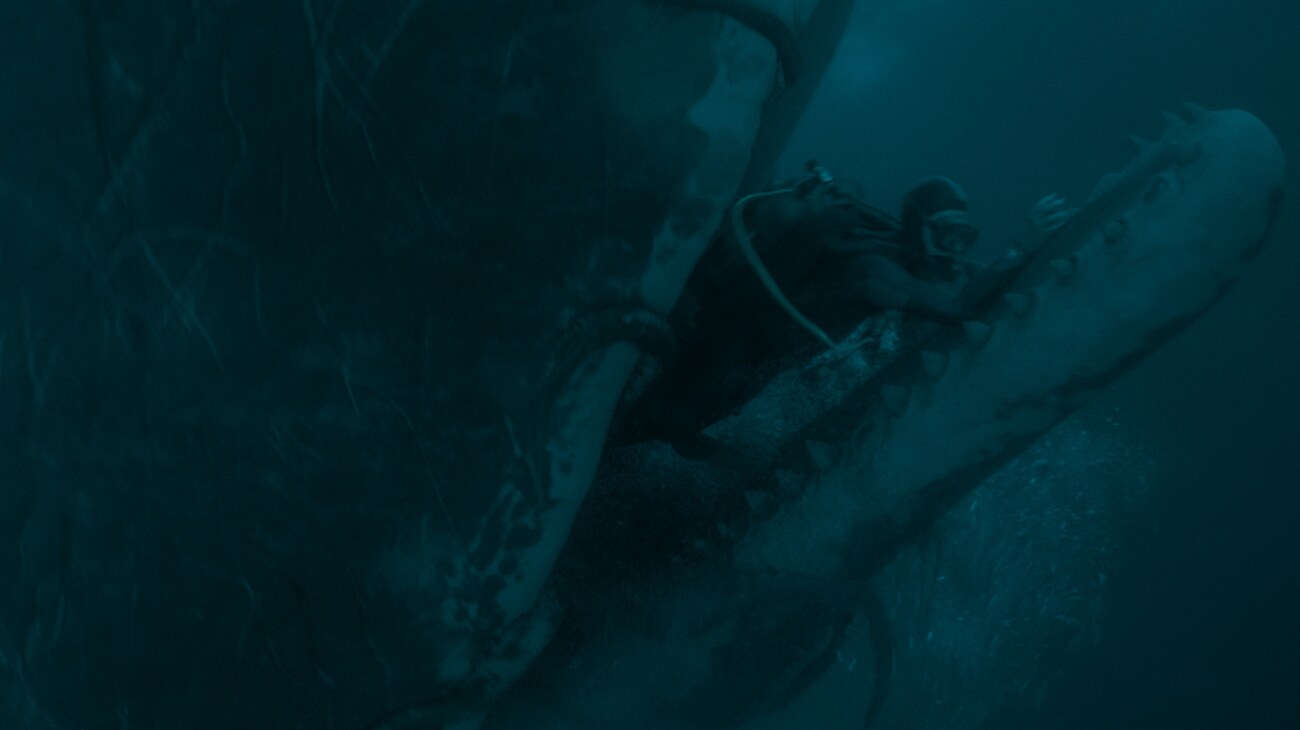
Currently showing at Grand Cinemas, Whalefall begins with a premise that is as simple as it is terrifying: a diver is swallowed by a sperm whale and has roughly an hour of oxygen left to find his way out. Directed by Brian Duffield, who co-wrote the screenplay with Daniel Kraus, the film is adapted from Kraus’s novel. It stars Austin Abrams as Jay Gardiner, alongside Josh Brolin, Elisabeth Shue, Emily Rudd, Jane Levy and John Ortiz.
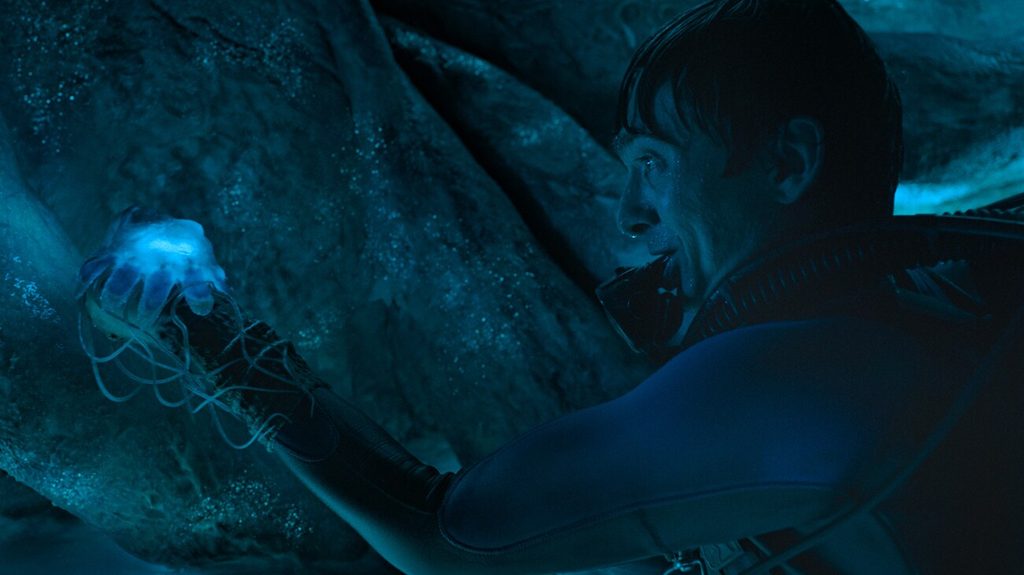
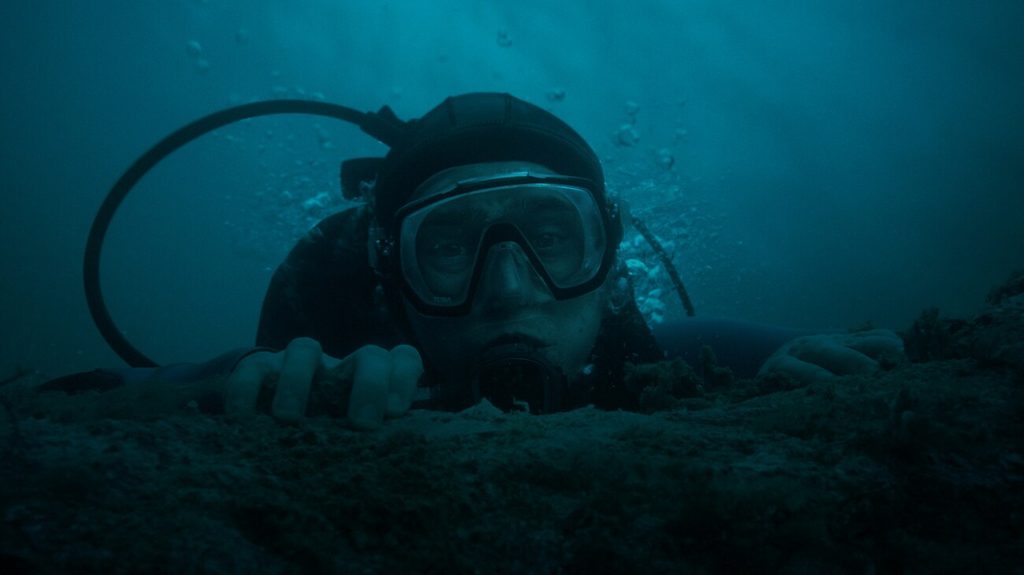
Jay returns to the waters off the California coast a year after his father, Mitt, a skilled diver, dies by suicide. He hopes to recover his father’s remains, but the search takes a nightmarish turn when a sperm whale swallows him. Alone inside the animal, with his oxygen supply running down, Jay has little room for mistakes. He must work out how to escape before time runs out.
The situation gives Duffield a strong foundation for a survival thriller. There is no easy route to safety, no one to call on, and no guarantee that any attempt to escape will work. The whale’s interior is presented as a hostile, unfamiliar space, where the movement of the animal and the limits of Jay’s equipment turn even small decisions into risks. The production design and visual effects give the setting a disturbing physical quality, while the sound helps convey how completely cut off Jay is from the world outside.
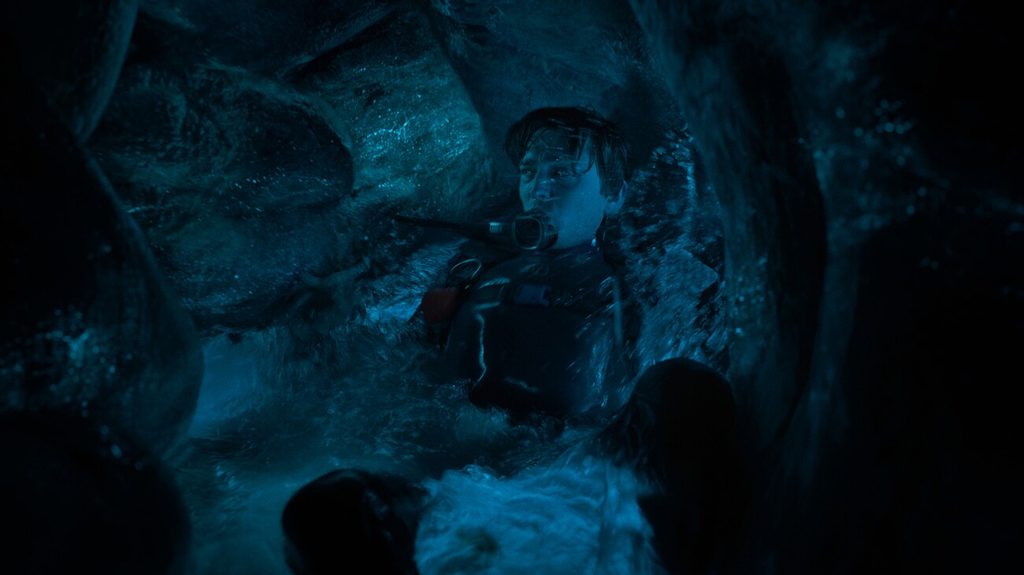
Austin Abrams has to do much of the heavy lifting. With his character isolated for long stretches, the performance depends less on dialogue than on physical detail: the effort of moving, the strain of thinking under pressure, and the fear that surfaces when a plan fails. Abrams makes Jay vulnerable without reducing him to a passive victim. His struggle feels most convincing when survival comes down to a practical problem that he must solve with whatever remains within reach.
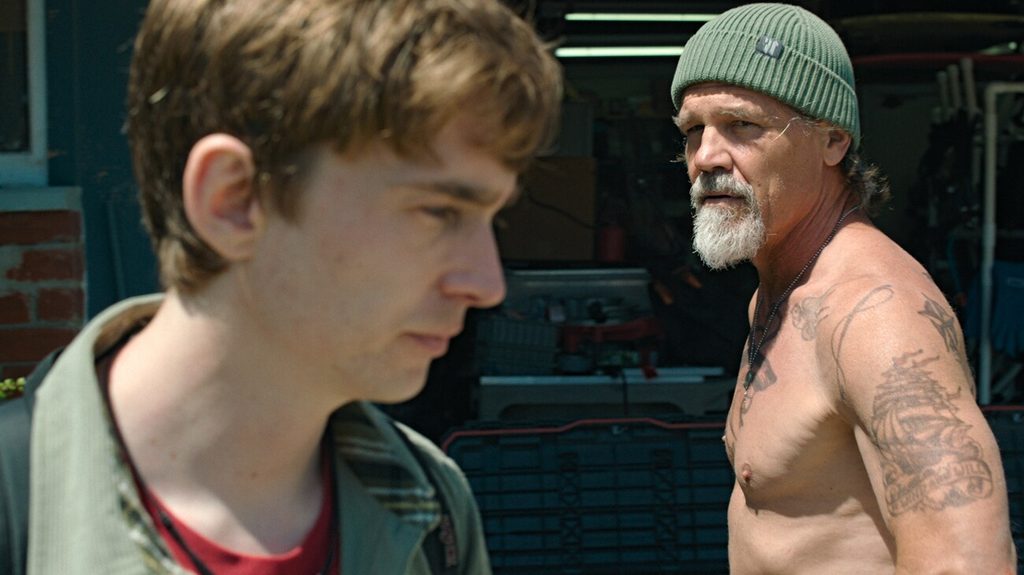
The film also has a more personal story to tell. Through flashbacks, Jay’s relationship with his father gradually comes into focus. Mitt, played by Josh Brolin, was a forceful and emotionally abusive man whose influence continues to shape his son long after his death. Jay’s decision to recover his father’s remains is bound up with a relationship that ended without resolution. The memories explain why this journey matters to him, but they also reveal how difficult it is to separate what he learned from his father from the damage his father caused.
Brolin gives Mitt a commanding presence, even in scenes that exist only in Jay’s memory. The tension between the father’s toughness and its emotional cost gives the flashbacks their purpose. Yet the film does not always handle the transition between past and present smoothly. Just as the physical ordeal gathers momentum, a return to the family history can interrupt it. Some memories deepen Jay’s character; others make points that the audience has already understood.
That is where Whalefall loses some of its grip. Its central predicament is compelling enough to sustain the film, but the family drama occasionally explains too much, while certain developments in Jay’s escape require a generous suspension of disbelief. The more the film stays close to his immediate physical struggle, the more effective it becomes. When it pauses to underline the emotional meaning of that struggle, the tension can loosen.
Still, the film has a distinct identity. The combination of a claustrophobic survival story and a damaged father-son relationship gives it more to work with than its extraordinary premise might suggest. Abrams anchors the action with a committed performance, and the world inside the whale provides images and challenges that are difficult to confuse with those of a conventional thriller. The balance is imperfect, but the film remains engaging when it trusts the predicament itself to carry the scene.
Whalefall is at its best when every breath matters and every decision has a cost. Its most effective tension comes not from explaining what Jay’s ordeal means, but from making us feel how little time he has left.
For the latest movie schedule at Grand Cinemas, visit our website.