Céline Dion is set to make a triumphant return to the French stage with a special residency at Paris La Défense Arena in 2026. The ten-date series, scheduled on Wednesdays and Saturdays from September 12 to October 14, offers fans an extraordinary chance to experience the singer live in one of Europe’s largest indoor venues, with over 40,000 seats per night.

Residency Dates:

  • September 12, 16, 19, 23, 26
  • September 30
  • October 3, 7, 10, 14

After nearly a decade away from French stages, Céline Dion’s return is highly anticipated. Her absence followed the pandemic and a challenging health battle, including a diagnosis of Stiff Person Syndrome in 2022. The residency format—with two shows per week and built-in rest days—has been carefully planned to support her wellbeing while allowing fans to celebrate her legendary career.

Presale registration opens now and closes April 2, 2026, at 19:00 CEST, with a lottery determining access. The presale begins April 7, and general ticket sales start April 10. Demand is expected to far exceed supply, making this one of the year’s most sought-after live experiences.

The documentary “Zaki Nassif: The Maestro of Lebanese Folklore” premieres today on Al Jazeera Documentary Channel at 19:00 Beirut time (Mecca Time). A repeat broadcast will follow on April 1 at 17:00 Beirut time.

The film takes viewers on an extraordinary journey through the life of Zaki Nassif, the Godfather of Lebanese Folklore, who dedicated over fifty years to building a rich and diverse musical legacy rooted in Lebanese traditions and rural life. It celebrates his collaborations with leading artists, his lasting influence on music and folklore, and his key role in the golden age of Lebanese music and the iconic Dabke, reflecting stories of homeland, beauty, and humanity.

Crew:

Concept, Research & Direction: Zalfa George Assaf
Executive Producer: Melhem Hashem / Presses Partout
Produced by: Al Jazeera Documentary

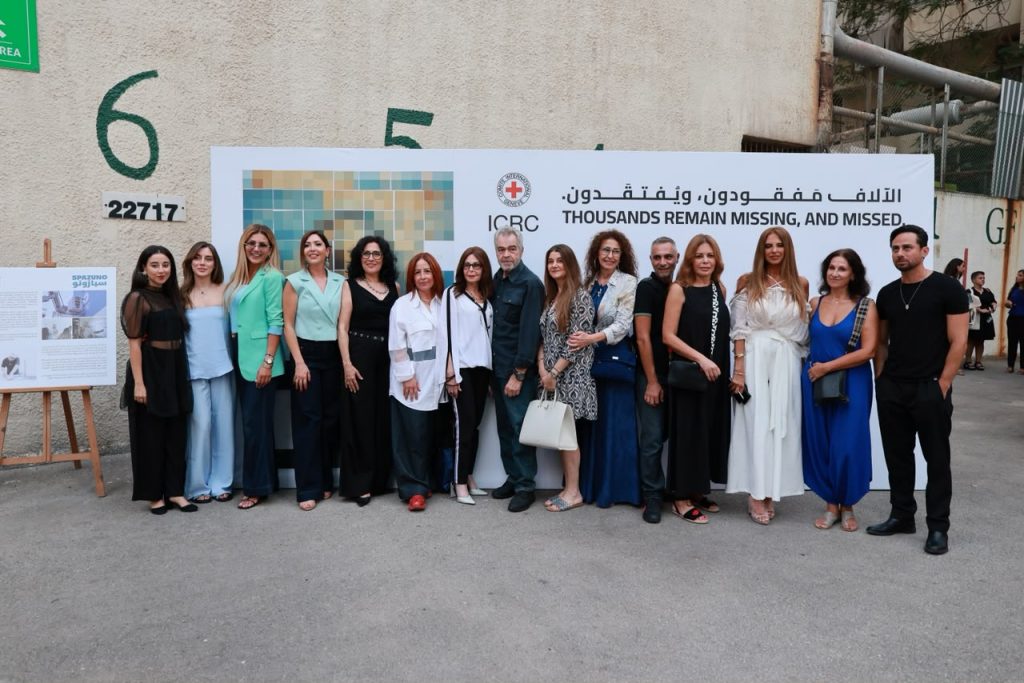
lIn response to the current situation and the growing needs of vulnerable communities, Gefinor Rotana
Beirut and Raouché Arjaan by Rotana have launched a humanitarian donation
collection initiative aimed at supporting families in need across Lebanon.

Through this initiative, both hotels are encouraging individuals and communities to contribute essential
items and donations that will be redistributed directly to families through the
Lebanese Red Cross, ensuring that aid reaches those who need it most in a
transparent and organized manner.

At a time when solidarity and collective action are more important than ever, the initiative reflects
Rotana’s ongoing commitment to social responsibility and community support. By
partnering with the Lebanese Red Cross, the campaign aims to mobilize meaningful
contributions and provide timely assistance to affected families.

Gefinor Rotana Beirut and Raouché Arjaan by Rotana are also calling on community voices and public
figures to help amplify the initiative and encourage wider participation. By
raising awareness and inspiring collective action, the campaign hopes to reach
more people willing to contribute and support families facing difficult
circumstances.

This initiative stands as a reminder that even in challenging times, acts of generosity and unity can bring
hope and tangible support to those who need it most.

By Charbel Karam

In times of war and mass displacement, architecture is no longer merely an art form or a matter of aesthetic luxury. Instead, it becomes a tool for humanitarian survival. From this need emerged the concept of Fabric Architecture one of the modern directions in contemporary architecture, where advanced fabrics and flexible materials are used to construct lightweight, rapidly deployable structures that can be assembled within hours.

Textile architecture relies on high-strength membrane fabrics stretched over lightweight metal frames or cable systems to create complete architectural spaces such as shelters, field hospitals, temporary schools, and even marketplaces.

How Textile Architecture Works

This technology relies on advanced synthetic materials such as PTFE Fabric and PVC Coated Polyester . These engineered fabrics have several key advantages:
• Lightweight construction compared with concrete or steel buildings
• Rapid assembly, allowing entire structures to be erected in a matter of hours
• Flexibility, making them easy to dismantle and relocate
• Resistance to weather conditions, including rain, wind, and heat
• Portability, enabling transportation to disaster or conflict zones

For this reason, textile structures have become an essential component of what is known as emergency or humanitarian architecture. Architects such as Shigeru Ban have pioneered the use of lightweight and unconventional materials to create quick housing solutions for people affected by disasters and conflicts.

Textile Architecture in War Zones

In armed conflicts, millions of people can lose their homes within hours. Textile architecture can offer rapid and practical solutions, including:

  1. Rapid Shelter Camps
    Entire camps can be established in a single day using tensile fabric structures that provide better insulation and durability than conventional tents.
  2. Mobile Field Hospitals
    Large fabric domes can quickly be transformed into medical facilities or emergency clinics.
  3. Temporary Schools for Displaced Children
    These structures can easily function as classrooms or community centers for education.
  4. Humanitarian Logistics Centers
    The large interior spans created by tensile structures make them ideal for aid distribution and emergency coordination.

Organizations such as UNHCR have experimented with similar solutions in refugee contexts around the world.

Global Examples

One well-known example of a refugee settlement is Zaatari Refugee Camp which gradually evolved into a functioning city. Although it initially relied on conventional tents, the trend in humanitarian architecture today is moving toward more durable and adaptable textile structures that provide improved living conditions.

How Could It Be Applied in Lebanon?

Lebanon lies in a region frequently affected by political instability and humanitarian crises, while also hosting large numbers of refugees. Textile architecture could therefore offer practical solutions in several scenarios:

  1. Organized Humanitarian Camps
    Instead of unplanned and chaotic settlements, modular textile units could be designed as organized neighborhoods with shared services and public spaces.
  2. Mobile Emergency Infrastructure
    The army or civil defense could deploy portable textile structures to rapidly establish shelters, hospitals, or relief centers after conflict or disasters.
  3. Temporary Educational Facilities
    Fabric structures could provide quick solutions for building schools for displaced communities, especially in border regions.
  4. Temporary Economic Spaces
    These structures could also serve as markets or small business hubs, allowing displaced people to work and reduce dependency on humanitarian aid.

Aya Hachem

Every spring the cinematic world turns its eyes toward the French Riviera. Inside the Palais des Festivals in Cannes, the future of world cinema often reveals itself before the festival even begins. As the industry moves beyond the turbulence surrounding the latest edition of the Berlin International Film Festival, critics and international film platforms have already begun sketching the possible shape of the 2026 edition of the Cannes Film Festival.

Early speculation suggests that the upcoming edition may become a true season of giants. A remarkable number of major auteurs associated with the festival are preparing new films currently in production or post-production. If even part of these expectations materializes, Cannes 2026 could host one of the most formidable Palme d’Or competitions in recent memory.

One of the most anticipated projects is The Way of the Wind, the long-awaited film by the elusive American director Terrence Malick. The filmmaker, who won the Palme d’Or with The Tree of Life, has spent years refining the project. The film explores episodes from the life of Jesus through Malick’s distinctive cinematic language, where drifting cameras, whispered voiceovers, and painterly imagery create a spiritual meditation rather than a conventional narrative.

Another filmmaker closely associated with Cannes is Swedish director Ruben Östlund. After winning the Palme d’Or twice with The Square and Triangle of Sadness, he returns with The Entertainment System Is Down. The story unfolds aboard a long-haul flight when the in-seat entertainment system suddenly fails. Deprived of digital distractions, the passengers are forced into direct human interaction, slowly exposing the fragile social codes that structure modern behavior.

Romanian auteur Cristian Mungiu is also expected to return with Fjord. Known for the rigorous realism that defined the Romanian New Wave, Mungiu previously won the Palme d’Or with 4 Months, 3 Weeks and 2 Days. His films often transform ordinary situations into morally charged psychological landscapes, and his new project is expected to continue examining the ethical tensions shaping contemporary Eastern Europe.

Mexican director Alejandro González Iñárritu may arrive with one of the most unusual collaborations of the year. His upcoming film Digger reportedly brings him together with Tom Cruise in a darkly satirical story about a man convinced that he alone can save humanity, only to trigger a global disaster himself. Known for ambitious visual storytelling since films such as The Revenant, Iñárritu’s return to English-language filmmaking has already generated significant curiosity.

Another possible contender comes from Irish filmmaker Martin McDonagh. Following the success of The Banshees of Inisherin, McDonagh is rumored to be working on a new project titled The Ninth Wild Horse. His cinema is known for its sharp dialogue, dark humor, and emotionally wounded characters navigating absurd situations that blend tragedy and irony.

Spanish director Albert Serra, whose enigmatic style fascinated critics in Pacifiction, could return with Out of This World. Serra’s films often unfold at an unusually slow rhythm, constructing hypnotic atmospheres where politics, philosophy, and existential ambiguity intertwine.

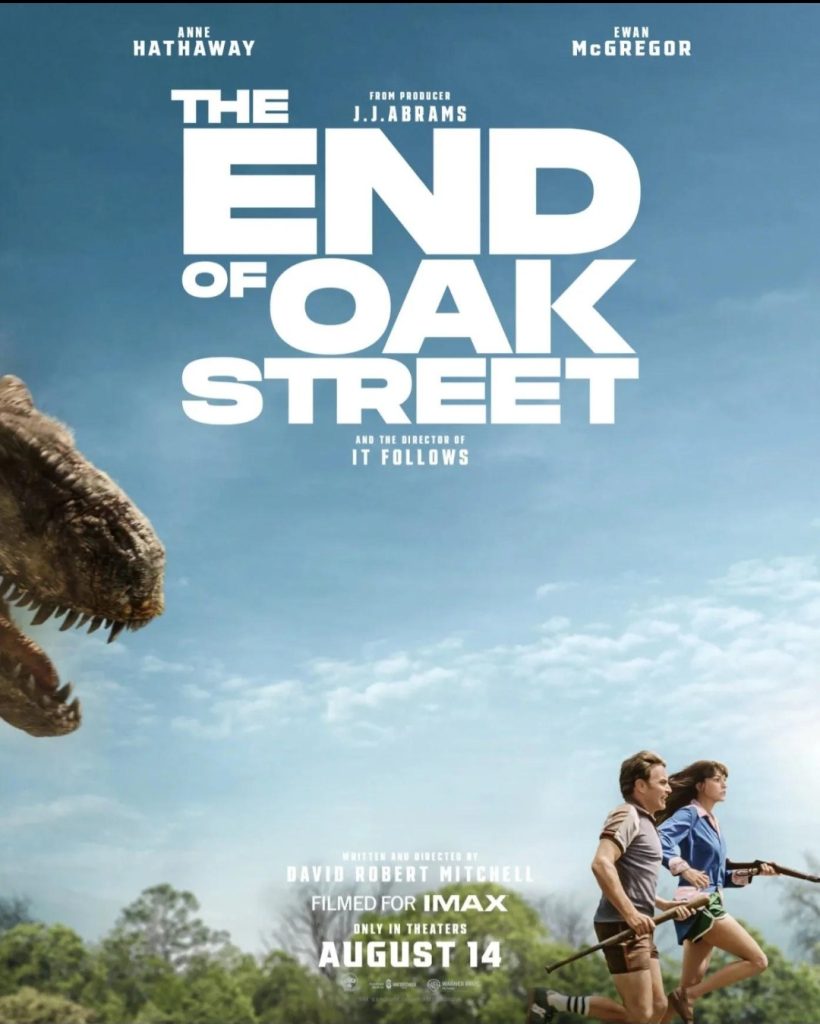
A different cinematic tone may arrive with Flowervale Street, directed by David Robert Mitchell and starring Anne Hathaway and Ewan McGregor. Mitchell previously gained international attention with It Follows, and his new film reportedly combines family drama with science fiction elements, potentially making it one of the festival’s most visually ambitious premieres.

French filmmaker Quentin Dupieux may also contribute a dose of surreal humor with Full Phil. Known for eccentric and playful storytelling, Dupieux often blends absurd situations with philosophical undertones, creating films that feel both mischievous and strangely profound.

One of the most talked-about possibilities remains a new film from American auteur Paul Thomas Anderson starring Leonardo DiCaprio and reportedly inspired by Vineland by Thomas Pynchon. Anderson’s reputation for complex character studies and sweeping emotional narratives ensures that any new project from him instantly becomes a major cinematic event.

Finally, the French industry may place its hopes on rising director Arthur Harari, whose upcoming film L’inconnue could mark his arrival in the festival’s highest competitive arena. After co-writing Anatomy of a Fall and directing Onoda, Harari has emerged as one of the most promising voices in contemporary French cinema.

Taken together, these potential entries suggest that Cannes 2026 could become a fascinating confrontation between established masters such as Terrence Malick and Paul Thomas Anderson and a new generation of provocative auteurs including Ruben Östlund and Albert Serra.

If these films ultimately converge on the Croisette, the race for the Palme d’Or may begin long before the festival’s opening night.

In a Ramadan setting filled with elegance and warmth, Maybelline hosted its annual Iftar at Ava Venue, bringing together influencers, media representatives, and prominent personalities. The evening combined refined Ramadan details with the brand’s vibrant identity, offering guests an immersive experience of social connection and Maybelline’s innovative world.
The highlight of the night was the regional unveiling of Maybelline’s new global campaign, “Who Stole the Lifter Glaze?”, a bold and playful concept that captured attendees’ attention and became the evening’s main conversation, reflecting vitality and contemporary elegance.
Through this event, Maybelline reaffirmed its vision of creating experiences that go beyond traditional beauty, transforming gatherings into meaningful, memorable moments.

Internationally acclaimed South Korean director Park Chan-wook will preside over the Feature Films Competition Jury at the 79th Festival de Cannes, marking a historic first for Korean cinema.

On Saturday, May 23, at the Grand Théâtre Lumière, Park and his jury will award the 2026 Palme d’Or, succeeding last year’s winner, Iran’s Jafar Panahi (It Was Just an Accident).

Known for his bold, visceral, and visually striking films, Park Chan-wook combines daring storytelling with social commentary, immersing audiences in worlds that are dark, thrilling, and unforgettable. His career at Cannes began with Oldboy (Grand Prix 2004), and his Competition,selected films, including Thirst (2009), The Handmaiden (2016), and Decision to Leave (2022) have earned major accolades.

Park’s presidency celebrates Korean cinema’s creativity and global impact, from early pioneers like Im Kwon-taek to Palme d’Or winner Bong Joon-ho (2019). Actors such as Jeon Do-yeon and Song Kang-ho further showcase Korea’s cinematic talent.

Reflecting on his upcoming role, Park Chan-wook said:
“The theater is dark so that we may see the light of cinema… this simple act of gathering to watch a film together is itself a moving and universal expression of solidarity.”

Cannes audiences will witness the Palme d’Or award ceremony on May 23, under the discerning eyes of Park Chan-wook and his jury.

On the occasion of International Women’s Day, Metropolis Cinema Association, in collaboration with Nathalie and Peter Hrechdakian, is pleased to present a special screening of “C’è ancora domani” (There’s Still Tomorrow) directed by Paola Cortellesi on Sunday, March 8, 2026, at 7:30 PM.

Produced in Italy in 2023, the 118-minute film (1h58) will be screened in Italian with English subtitles.

Set in mid-1940s Rome, in the fragile aftermath of World War II, the film follows Delia (Paola Cortellesi), a wife and mother of three whose identity is entirely defined by those roles. Her husband Ivano (Valerio Mastandrea) rules the household as its undisputed patriarch, working hard yet constantly asserting his authority. Living under the same roof is his aging father Ottorino (Giorgio Colangeli), whom Delia tirelessly cares for.

As spring approaches, the family prepares for the engagement of their eldest daughter Marcella (Romana Maggiora Vergano) to her middle-class boyfriend Giulio (Francesco Centorame). While the family sees the marriage as a hopeful step forward, Marcella dreams of it as a way to escape. Delia, meanwhile, believes a respectable wedding is the ultimate fulfillment of her duty—until a mysterious letter arrives, awakening in her the courage to imagine a different future for herself and her daughter.

The film also features Emanuela Fanelli, Vinicio Marchioni, Paola Tiziana Cruciani, Raffaele Vannoli, Yonv Joseph, Alessia Barela, and Federico Tocci.

“C’è ancora domani” received widespread critical acclaim and major international recognition, including:

  • Best New Director, Best Original Screenplay, Best Leading Actress, and Best Supporting Actress at the David di Donatello
  • Film of the Year at the Nastri d’Argento
  • Special Jury Prize and Audience Award at the Rome Film Festival
  • Dragon Award for Best International Film (Audience Award) at the Göteborg Film Festival
  • People’s Choice Award at the Pingyao International Film Festival
  • Sydney Film Prize at the Sydney Film Festival
  • Best Foreign Film at the Golden Rooster Awards
  • Best Film at the Golden Panda Awards

The screening will be followed by a panel discussion featuring:

  • Jumana Zabaneh – Programme Management Specialist at UN Women
  • Youmna Makhlouf – Lawyer, Lecturer at the Faculty of Law and Political Science at USJ, and member of Legal Agenda
  • Maya Al Ammar – Journalist, writer, activist, and co-founder of MedFemiNiswiya

Moderated by Karim Nammour – Lawyer, legal researcher, and member of Legal Agenda.

A powerful story of postponed courage and quiet resistance, “There’s Still Tomorrow” reminds us that even in the most constrained lives, the possibility of change remains.


In a setting where elegance meets tradition,
the “Alf Layle W Layle” Ramadan tent at Movenpick Hotel Beirut offers a refined
and immersive experience that beautifully captures the spirit of the holy
month, bringing together the warmth of Iftar and the vibrancy of Suhoor under
one enchanting roof.

As the sun sets, guests are welcomed to a
lavish Iftar buffet featuring an extensive selection of oriental and
international dishes. From fresh appetizers and live cooking stations to
carefully crafted main courses, every detail reflects quality and authenticity.
The dessert corner stands out as a celebration of Ramadan flavors, with
traditional favorites such as kunafa, qatayef, and maamoul presented with a
modern, elegant touch. Adding to the enchanting ambiance, a live qanun
performance during Iftar fills the space with soulful oriental melodies,
elevating the dining experience with a touch of cultural elegance. The ambiance
is serene and inviting, enhanced by warm lighting and décor inspired by the
timeless tales of the East. Later in the evening, the atmosphere transforms
into a lively Suhoor gathering filled with music, conversation, and cultural
performances. Live oriental entertainment and the mesmerizing Darwish dance
performance add a dynamic rhythm to the night, while guests indulge in a
curated Suhoor menu offering a mix of light bites, traditional dishes, and
grilled specialties. The setting becomes a social haven where friends and
families reconnect, creating memorable Ramadan moments that extend well into
the night.

At “Alf Layle W Layle,” Mövenpick redefines
the Ramadan experience; not simply as a meal, but as a complete
journey that blends flavor, culture, elegance, and celebration in the heart of
Beirut.


Stay up to date with the most current film festival and market dates worldwide.

Ongoing

February

March

April

May

June

July

August

September

October

November

December

Scroll to Top