Paris is currently hosting a landmark cultural exhibition titled “Marilyn Monroe: 100 Years”, held at the Cinémathèque française, honoring one of Hollywood’s most enduring icons on the occasion of her centenary.

The exhibition officially opened on April 8, 2026, and will run until July 26, 2026, offering visitors a rare and immersive journey into the life and legacy of Marilyn Monroe.

Far beyond her global image as a cinematic and cultural symbol, the exhibition seeks to reframe Monroe as a serious film actress, exploring her artistic evolution through a rich collection of archival photographs, original film materials, posters, costumes, and personal documents drawn from her Hollywood career.

By revisiting her work and public image through a cinematic lens, the exhibition highlights Monroe’s lasting influence on film history, popular culture, and the global imagination, positioning her not only as a mythic figure, but as a complex artist whose impact continues to resonate decades after her passing.

Held in the heart of Paris, the event stands as one of the city’s most significant cultural highlights of the season, reaffirming Monroe’s place among the most influential figures in cinema history.
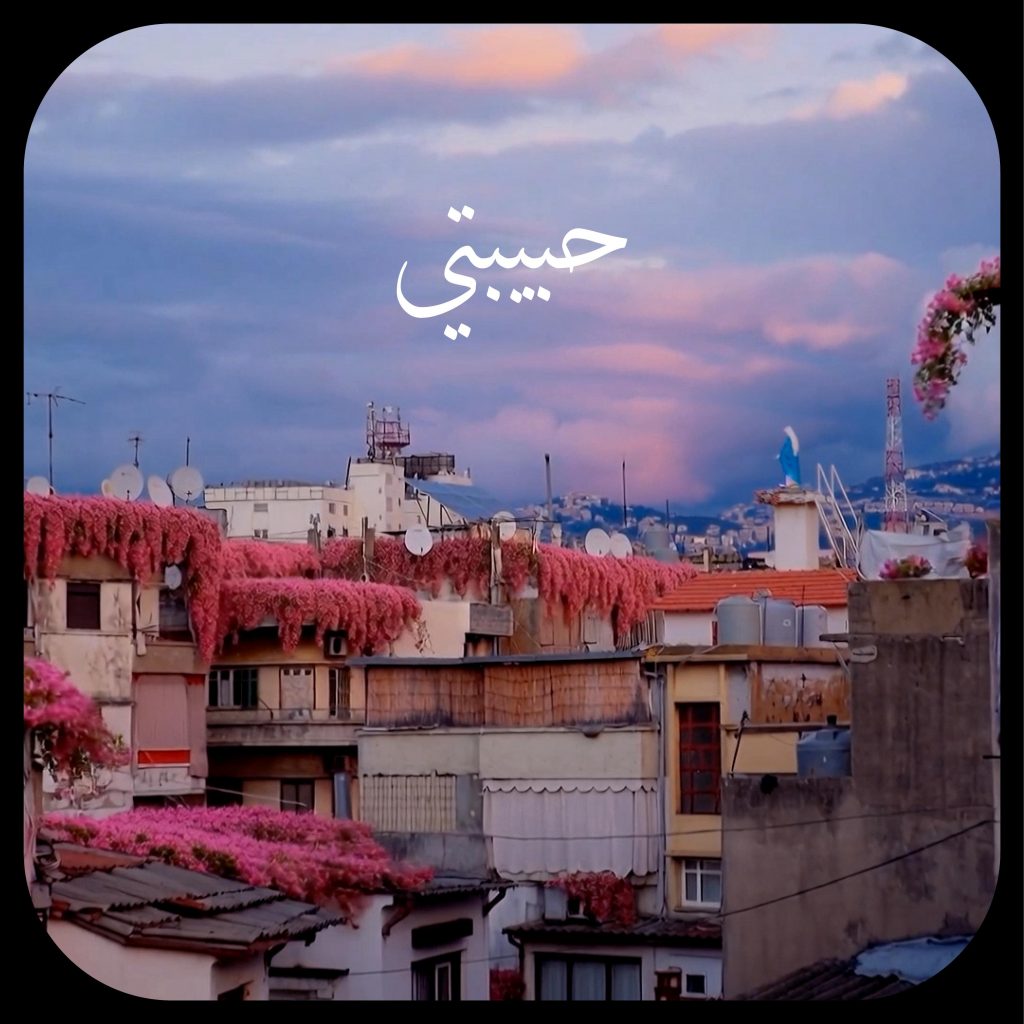

Abeer Nehme releases “Habibati,” a new single and music video that unfolds as a poetic tribute to Beirut, shaped by love, longing, and emotional resilience. Produced by Universal Music MENA, the song is intimate in tone and elevated in language, anchored by a refrain that captures its emotional core: “You are Beirut… we love you. Can you hear us?”
In “Habibati,” Beirut is imagined as far more than a city. It becomes a living presence in memory and feeling a home, a story, a dream, and a name expansive enough to hold love, belonging, and ache all at once. From that intimate emotional space, the song emerges as a deeply personal meditation on attachment and endurance, painting Beirut as both fragile and eternal.
Written and composed by Wissam Keyrouz, “Habibati” is built around a poem in classical Arabic, shaped with lyrical restraint and emotional clarity. Its language is tender, elevated, and immediate, allowing Beirut to appear in its most soulful form: beloved, missed, and forever alive in the heart. Music Production by Sleiman Damien embraces that atmosphere with subtlety and grace, opening a transparent, flowing sonic space in which melody and text move together with unusual delicacy. The result is a carefully crafted work in which every musical element serves the emotional truth of the song while keeping the poetry at its center.
Visually, the accompanying music video, directed by Nadim Hobeika, offers a poetic portrait of Beirut, where traces of reality meet a dreamlike vision of a city in constant renewal. Pain lingers at the edge of the frame like a faint shadow, yet light remains the guiding force. Beirut appears as a city moving toward its most beautiful self, as though, in the words of the song, it were preparing to wear “a dress for the most beautiful of days.”


Through this fusion of image and music, “Habibati” becomes more than a song. It becomes a shared emotional space  an invitation to hold on to light, and a reminder that Beirut, as Abeer Nehme sings it, is not simply a place but an unending promise, a story that survives, and a longing that does not fade: “You are the arrival, and you are the beginning… and in the end, you are what remains.”
With “Habibati,” Abeer Nehme adds another deeply expressive work to a career defined by refinement, emotional intelligence, and artistic sincerity. In this song, she holds Beirut close  with tenderness, devotion, and a voice that turns music into a space of intimacy, reflection, and feeling. And in its closing call, “Habibati” opens its wings toward the city one more time: “My love, come… let us fly. Your wings are the universe. How could we not?”

The 79th edition of the Festival de Cannes has officially unveiled its full selection of films, setting the stage for one of the most anticipated cinematic events of the year, scheduled to take place from May 12 to 23, 2026.

Announced by Festival President Iris Knobloch and General Delegate Thierry Frémaux, this year’s lineup reflects a diverse and ambitious international program spanning major auteurs, emerging voices, and highly anticipated world premieres.

The festival will open with “La Vénus Électrique” by Pierre Salvadori, launching a program that brings together global cinema across multiple sections, including Competition, Un Certain Regard, Cannes Première, Midnight Screenings, Special Screenings, and Out of Competition.

The Competition section features a strong slate of acclaimed filmmakers, including Pedro Almodóvar (Amarga Navidad), Asghar Farhadi (Parallel Tales), Hirokazu Kore-eda (Sheep in the Box), Park Chan-wook (Hope), and the Dardenne tradition of social realism is echoed through works like Lukas Dhont (Coward) and Ryusuke Hamaguchi (All of Sudden). Other notable entries include Pawel Pawlikowski (Fatherland), Agnès Jaoui (L’Objet du Délit), and Zvyagintsev (Minotaur), marking a powerful return for several major directors.

The Un Certain Regard section continues its focus on bold and emerging voices, featuring films such as Teenage Sex and Death at Camp Miasma by Jane Schoenbrun, alongside first-time features from international filmmakers across Europe, Africa, and Asia.

In the Midnight Screenings, genre-driven and experimental works take center stage, including titles by Quentin Dupieux (Full Phil) and Yeon Sang-ho (Gun-Che (Colony)), while the Cannes Première section showcases established names such as Daniel Auteuil and Volker Schlöndorff.

The festival also highlights a strong selection of Special Screenings, including new works from Ron Howard (Avedon) and Steven Soderbergh (John Lennon: The Last Interview), reinforcing Cannes’ commitment to blending artistic cinema with cultural and historical storytelling.

With its 2026 selection, Cannes once again positions itself as a global platform for cinematic excellence, bringing together visionary directors, debut filmmakers, and boundary-pushing storytelling from around the world.

Olivia Wilde is back in the director’s chair, this time bringing together an impressive ensemble in her latest film, The Invite. The first trailer, released by A24 on Tuesday, April 7, offers a glimpse into the suspenseful drama starring Wilde herself alongside Penélope Cruz, Edward Norton, and Seth Rogen.

In The Invite, Wilde, 42, and Rogen, 43, play Angela and Joe, a married couple whose relationship is teetering on the edge. Their lives take a tense turn when they host a dinner for their mysterious upstairs neighbors, portrayed by Cruz, 51, and Norton, 56. According to the film’s synopsis, “Joe and Angela’s marriage is on thin ice. When they invite their enigmatic upstairs neighbors for a dinner party, the night spirals into unexpected places. Have they reignited the spark or lit the match that burns it all down?”

Co-written by Rashida Jones and Will McCormack, this marks Wilde’s third directorial effort and her first since the 2022 psychological thriller Don’t Worry Darling. Wilde previously shared on social media that the film was completed in just 23 days in May 2025, praising her cast as “some of the greatest humans ever made.”

The film premiered at the 2026 Sundance Film Festival in January, where it was met with glowing reviews and a standing ovation. Wilde was visibly emotional during the post-screening Q&A, telling the audience, “This was the dream, to premiere right here for you guys.” Festival director Kim Yutani added that the ovation was “very well deserved.”

Warner Bros. has dropped a new Supergirl trailer, and it doesn’t hold back. The biggest surprise? Jason Momoa stepping into the role of the infamous Lobo, promising chaos and intensity.

The trailer ramps up the action while putting Superman’s loyal dog, Krypto, in danger adding an emotional edge to the high-stakes adventure.

Beyond the thrills, the clip hints at a broader, more intricate world, introducing new characters and conflicts that suggest this Supergirl will deliver a fresh take on the DC superhero universe.


Supergirl | Official Trailer

The production company has released a fresh set of character posters for the highly anticipated The Devil Wears Prada 2, giving fans a glimpse of the main cast ahead of the film’s May premiere.

Anne Hathaway, Meryl Streep, Emily Blunt, and Stanley Tucci all feature in the new posters, each striking a pose that reflects their character’s growth in the sequel. The images capture the elegant and fashionable world that has made the franchise iconic.

Following the huge success of the first film, the sequel promises a new storyline while staying true to the style and drama that audiences loved.

The Devil Wears Prada 2 is scheduled to premiere in cinemas on May 1.

Céline Dion is set to make a triumphant return to the French stage with a special residency at Paris La Défense Arena in 2026. The ten-date series, scheduled on Wednesdays and Saturdays from September 12 to October 14, offers fans an extraordinary chance to experience the singer live in one of Europe’s largest indoor venues, with over 40,000 seats per night.

Residency Dates:

  • September 12, 16, 19, 23, 26
  • September 30
  • October 3, 7, 10, 14

After nearly a decade away from French stages, Céline Dion’s return is highly anticipated. Her absence followed the pandemic and a challenging health battle, including a diagnosis of Stiff Person Syndrome in 2022. The residency format—with two shows per week and built-in rest days—has been carefully planned to support her wellbeing while allowing fans to celebrate her legendary career.

Presale registration opens now and closes April 2, 2026, at 19:00 CEST, with a lottery determining access. The presale begins April 7, and general ticket sales start April 10. Demand is expected to far exceed supply, making this one of the year’s most sought-after live experiences.

The documentary “Zaki Nassif: The Maestro of Lebanese Folklore” premieres today on Al Jazeera Documentary Channel at 19:00 Beirut time (Mecca Time). A repeat broadcast will follow on April 1 at 17:00 Beirut time.

The film takes viewers on an extraordinary journey through the life of Zaki Nassif, the Godfather of Lebanese Folklore, who dedicated over fifty years to building a rich and diverse musical legacy rooted in Lebanese traditions and rural life. It celebrates his collaborations with leading artists, his lasting influence on music and folklore, and his key role in the golden age of Lebanese music and the iconic Dabke, reflecting stories of homeland, beauty, and humanity.

Crew:

Concept, Research & Direction: Zalfa George Assaf
Executive Producer: Melhem Hashem / Presses Partout
Produced by: Al Jazeera Documentary

lIn response to the current situation and the growing needs of vulnerable communities, Gefinor Rotana
Beirut and Raouché Arjaan by Rotana have launched a humanitarian donation
collection initiative aimed at supporting families in need across Lebanon.

Through this initiative, both hotels are encouraging individuals and communities to contribute essential
items and donations that will be redistributed directly to families through the
Lebanese Red Cross, ensuring that aid reaches those who need it most in a
transparent and organized manner.

At a time when solidarity and collective action are more important than ever, the initiative reflects
Rotana’s ongoing commitment to social responsibility and community support. By
partnering with the Lebanese Red Cross, the campaign aims to mobilize meaningful
contributions and provide timely assistance to affected families.

Gefinor Rotana Beirut and Raouché Arjaan by Rotana are also calling on community voices and public
figures to help amplify the initiative and encourage wider participation. By
raising awareness and inspiring collective action, the campaign hopes to reach
more people willing to contribute and support families facing difficult
circumstances.

This initiative stands as a reminder that even in challenging times, acts of generosity and unity can bring
hope and tangible support to those who need it most.

By Charbel Karam

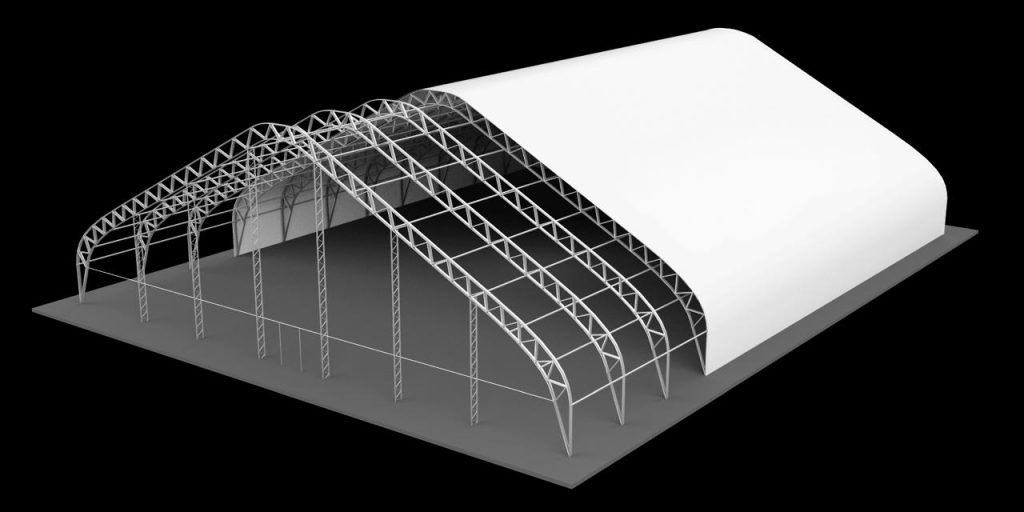
In times of war and mass displacement, architecture is no longer merely an art form or a matter of aesthetic luxury. Instead, it becomes a tool for humanitarian survival. From this need emerged the concept of Fabric Architecture one of the modern directions in contemporary architecture, where advanced fabrics and flexible materials are used to construct lightweight, rapidly deployable structures that can be assembled within hours.

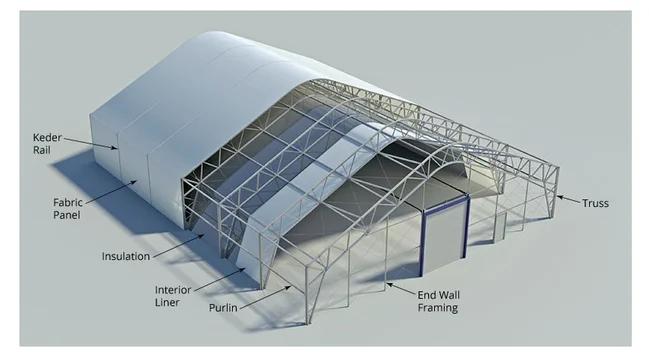
Textile architecture relies on high-strength membrane fabrics stretched over lightweight metal frames or cable systems to create complete architectural spaces such as shelters, field hospitals, temporary schools, and even marketplaces.

How Textile Architecture Works

This technology relies on advanced synthetic materials such as PTFE Fabric and PVC Coated Polyester . These engineered fabrics have several key advantages:
• Lightweight construction compared with concrete or steel buildings
• Rapid assembly, allowing entire structures to be erected in a matter of hours
• Flexibility, making them easy to dismantle and relocate
• Resistance to weather conditions, including rain, wind, and heat
• Portability, enabling transportation to disaster or conflict zones

For this reason, textile structures have become an essential component of what is known as emergency or humanitarian architecture. Architects such as Shigeru Ban have pioneered the use of lightweight and unconventional materials to create quick housing solutions for people affected by disasters and conflicts.

Textile Architecture in War Zones

In armed conflicts, millions of people can lose their homes within hours. Textile architecture can offer rapid and practical solutions, including:

  1. Rapid Shelter Camps
    Entire camps can be established in a single day using tensile fabric structures that provide better insulation and durability than conventional tents.
  2. Mobile Field Hospitals
    Large fabric domes can quickly be transformed into medical facilities or emergency clinics.
  3. Temporary Schools for Displaced Children
    These structures can easily function as classrooms or community centers for education.
  4. Humanitarian Logistics Centers
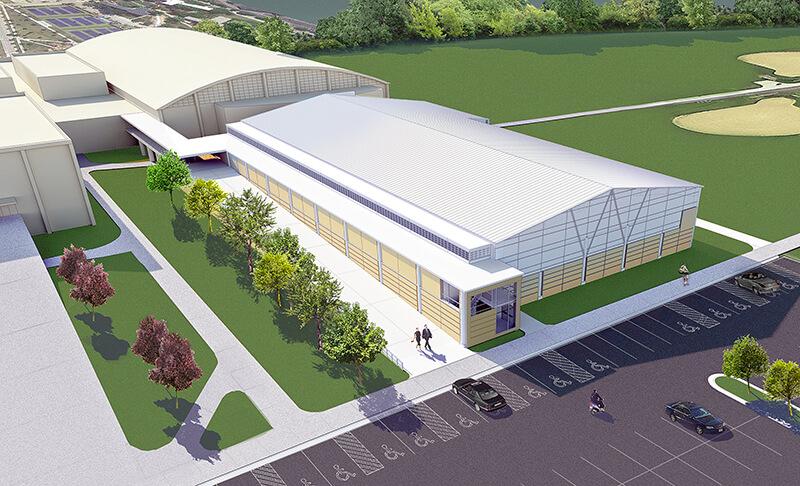
    The large interior spans created by tensile structures make them ideal for aid distribution and emergency coordination.

Organizations such as UNHCR have experimented with similar solutions in refugee contexts around the world.

Global Examples

One well-known example of a refugee settlement is Zaatari Refugee Camp which gradually evolved into a functioning city. Although it initially relied on conventional tents, the trend in humanitarian architecture today is moving toward more durable and adaptable textile structures that provide improved living conditions.

How Could It Be Applied in Lebanon?

Lebanon lies in a region frequently affected by political instability and humanitarian crises, while also hosting large numbers of refugees. Textile architecture could therefore offer practical solutions in several scenarios:

  1. Organized Humanitarian Camps
    Instead of unplanned and chaotic settlements, modular textile units could be designed as organized neighborhoods with shared services and public spaces.
  2. Mobile Emergency Infrastructure
    The army or civil defense could deploy portable textile structures to rapidly establish shelters, hospitals, or relief centers after conflict or disasters.
  3. Temporary Educational Facilities
    Fabric structures could provide quick solutions for building schools for displaced communities, especially in border regions.
  4. Temporary Economic Spaces
    These structures could also serve as markets or small business hubs, allowing displaced people to work and reduce dependency on humanitarian aid.
Scroll to Top