
Christopher Nolan Transforms an Ancient Myth into a Profound Journey of Memory, Loss and Humanity
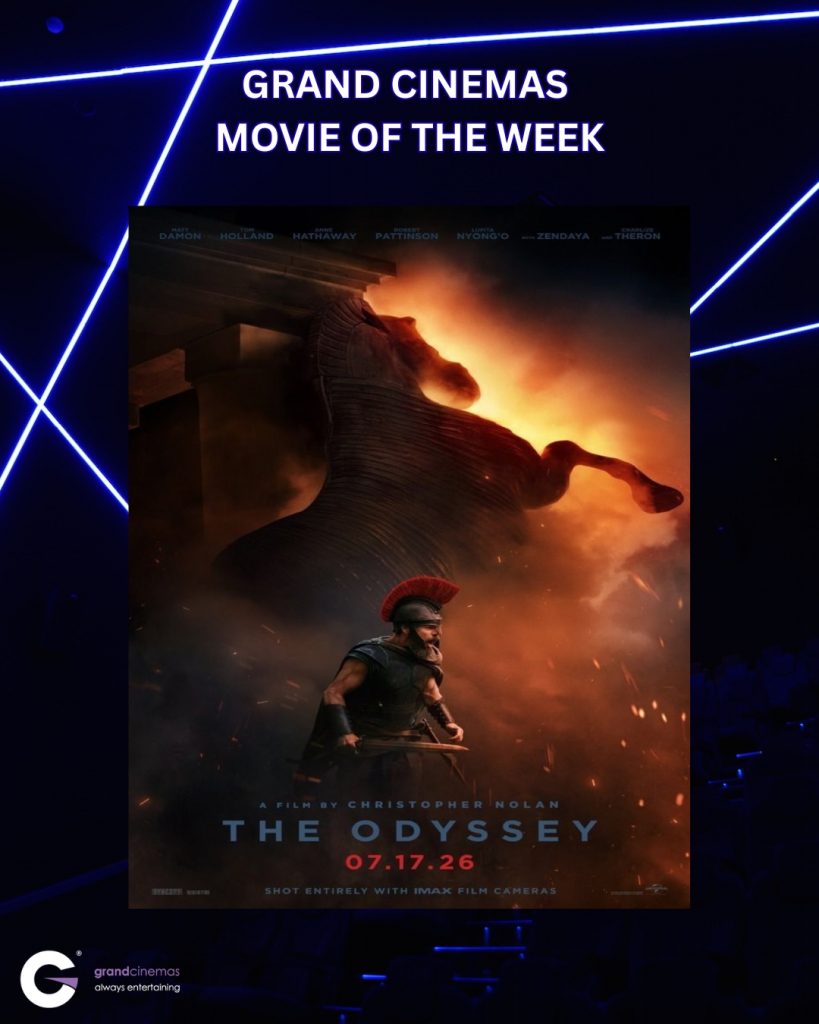
Currently screening at Grand Cinemas Lebanon, The Odyssey brings Christopher Nolan’s cinematic vision of Homer’s timeless epic to the big screen, transforming an ancient myth into a profound exploration of survival, identity and the meaning of returning home after being forever changed by war.
After years of exploring time, memory, history and the human condition through some of the most ambitious films in contemporary cinema, Christopher Nolan returns with The Odyssey, a monumental adaptation of Homer’s legendary epic that represents one of the filmmaker’s most ambitious cinematic journeys.
Yet Nolan does not approach The Odyssey simply as a story of gods, monsters and mythical adventures. Instead, he looks beneath the surface of the legend to discover a deeply human story: the journey of a man who has lost years of his life to conflict and must confront not only the dangers of the world around him, but also the transformation within himself.
The central question of the film is not merely whether Odysseus will reach Ithaca, but whether the man who returns will still be the same person who left.

From Ancient Epic to Modern Cinematic Experience
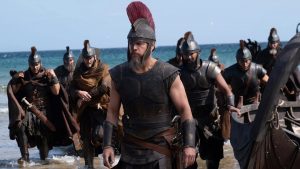
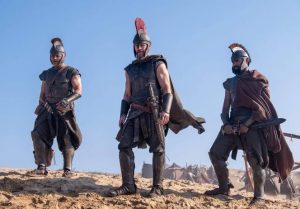
The film follows Odysseus, the legendary king of Ithaca and a warrior returning from the Trojan War, as he faces a perilous voyage across unknown seas, encountering extraordinary challenges, mythical forces and encounters that test his intelligence, resilience and humanity.
However, Nolan’s interpretation shifts the focus away from pure adventure toward the psychological consequences of the journey. The sea becomes more than a physical landscape; it becomes a reflection of uncertainty, trauma and the search for meaning.
Throughout his career, from Inception and Interstellar to Dunkirk and Oppenheimer, Nolan has repeatedly explored individuals confronting forces greater than themselves. In The Odyssey, Homer’s ancient world becomes a natural extension of those themes: a story about time lost, the scars of war and the fragile relationship between destiny and personal choice.
Rather than presenting Odysseus as an untouchable mythological hero, Nolan portrays him as a deeply human figure — a man carrying the weight of his decisions, his memories and the consequences of the battles he survived.

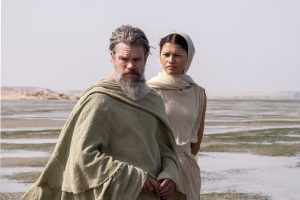
Matt Damon’s Odysseus: The Man Behind the Legend
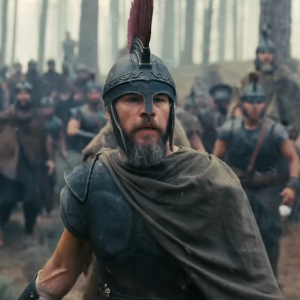
Matt Damon takes on the role of Odysseus, bringing a combination of strength, intelligence and emotional restraint to the legendary character. His interpretation reflects Nolan’s vision of a hero who is not defined only by victory, but by endurance and the psychological cost of survival.
Damon’s Odysseus is not simply a warrior seeking glory; he is a man trying to reconnect with the life and identity he lost during years of separation. The performance highlights the contradiction at the heart of the character: a legendary king who must rediscover himself as a human being.
Anne Hathaway portrays Penelope, Odysseus’ wife, whose storyline represents the emotional foundation of the film. While Odysseus battles forces beyond his control, Penelope faces her own struggle at home, becoming a symbol of patience, intelligence and resilience rather than simply a figure waiting for a hero’s return.
Tom Holland plays Telemachus, Odysseus’ son, adding another emotional dimension to the narrative. His character reflects the experience of a younger generation trying to understand the legacy of a father whose absence has shaped his entire life.
The film’s ensemble also includes Robert Pattinson, Lupita Nyong’o, Zendaya and Charlize Theron, contributing to Nolan’s expansive vision of a world where human conflicts, mythical forces and personal destinies collide.
Nolan’s Visual Language: When the World Becomes Part of the Story
One of Christopher Nolan’s defining qualities as a filmmaker is his commitment to creating immersive cinematic experiences built on scale, physicality and visual precision. In The Odyssey, this approach becomes central to transforming an ancient literary masterpiece into a contemporary theatrical experience.
Shot with large-format IMAX photography, the film uses vast landscapes, oceans and monumental environments not merely as backgrounds, but as extensions of the characters’ emotional journey.
Working with cinematographer Hoyte van Hoytema, Nolan continues their collaboration after films including Dunkirk, Tenet and Oppenheimer, creating a visual style that balances overwhelming scale with moments of intimacy and silence.
The storms, unknown territories and vastness of the sea are not only elements of spectacle; they represent the internal struggles of the characters. The physical journey becomes inseparable from the emotional one.
Between Mythological Grandeur and Human Vulnerability
The greatest challenge in adapting The Odyssey is that audiences already know the legendary story. The power of the film, therefore, does not come from discovering what happens, but from experiencing how the journey is presented and what new meaning can be found within it.
Nolan’s interpretation focuses on what remains after the battles are over. Behind the mythology, the creatures and the epic scale, there is a simple yet universal human question: how does a person return home after becoming someone different?
This is where The Odyssey finds its cinematic identity. It is not only a story about reaching a destination; it is a reflection on transformation, memory and the emotional distance between the person we once were and the person we become.
By revisiting one of the oldest narratives in human history, Nolan creates a film that connects ancient mythology with contemporary concerns. The journey of Odysseus becomes a journey into the human experience itself a search for belonging, forgiveness and the possibility of returning to what we call home.
The Odyssey is currently screening at Grand Cinemas Lebanon.